
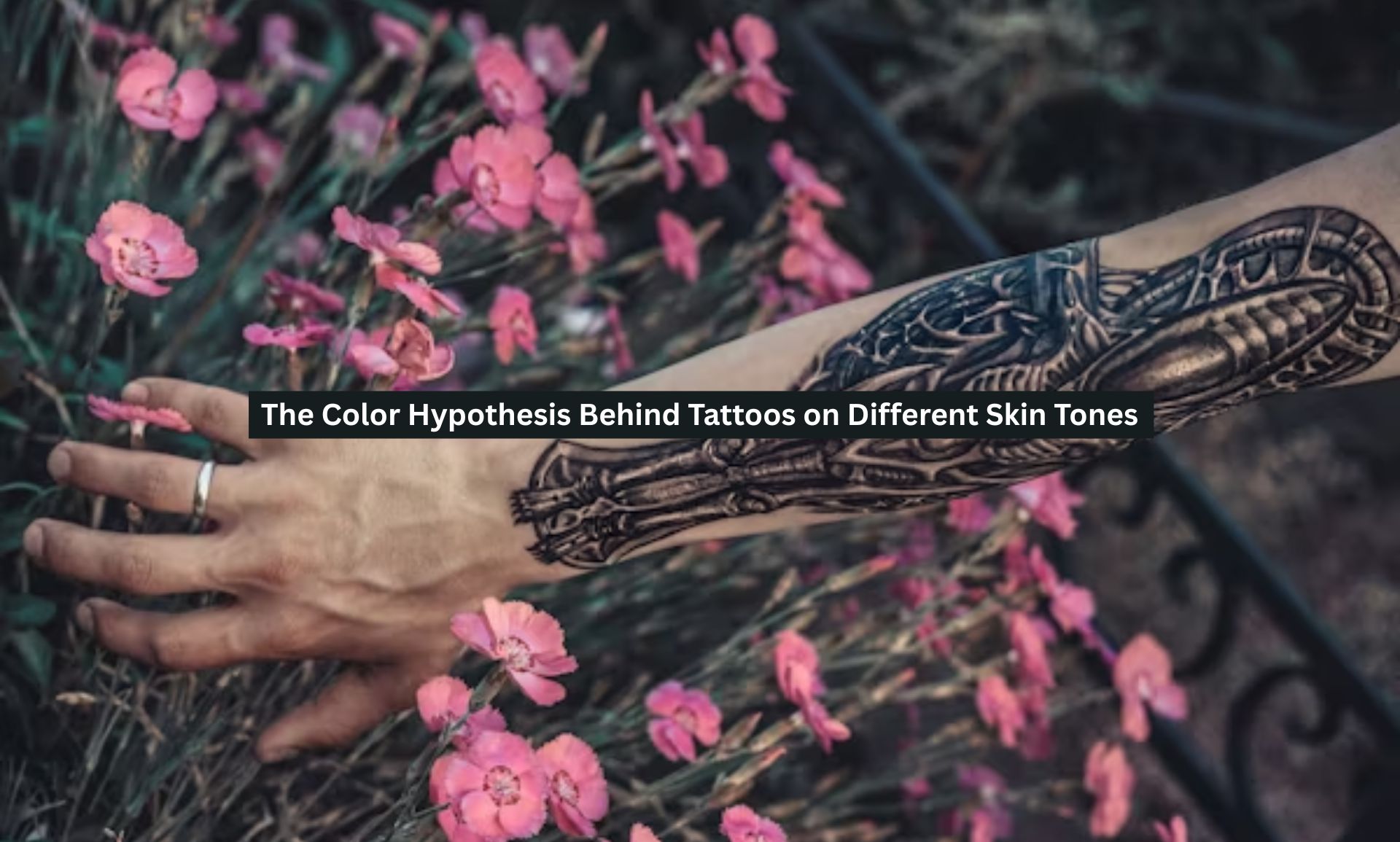
Our studio’s area fair exterior of Atlanta draws in a differing clientele that we are glad to serve with extraordinary tattoo craftsmanship. Early in my career, some time recently I got to be known for illustrative color inking, I handled tattoos in each fashion on all sorts of skin. Through my travel, guides, encounters, and the advancing industry have given me with important bits of knowledge into the specialized application of colored inks on skin.
In reality, between 2014 and 2016, I traveled to tattoo traditions and conferences to instruct a color hypothesis workshop called “The Tattooist’s Palette,” which was inevitably recorded and has been seen by thousands of tattoo artists.
Even with all my individual involvement and the collective shrewdness I’ve assembled from instructive materials by peers, I still waver to position myself as an specialist on this subject. When I looked into the photo documentation of my career, I found that I didn’t regularly capture recuperated photographs of work on darker skin. Indeed in spite of the fact that I inked clients from all strolls of life, I by and large exhorted a preservationist approach to the utilize of color. For suntanned or melanated skin, I would propose dark and gray.
This tried-and-true approach to maintaining a strategic distance from color on darker skin was considered more unsurprising and less hazardous for the result of the recuperated tattoo.
What I hadn’t realized through those a long time was that I was propagating a one-size-fits-all attitude, or maybe than investigating the potential to challenge and break the set up standards. I didn’t recognize that by not empowering clients to take part in the revelation prepare approximately how tattoo ink settles into their skin, I might be supporting a possibly deceiving idea that color doesn’t “work” on darker skin.
In this article, I point to investigate the theme of colored tattoos on darker skin through the focal point of color hypothesis. For potential clients inquisitive around how color will show up on their interesting skin, I trust to light up the best hones and clarify the reasons behind them. Moreover, I’m sharp on the opportunity to tattoo more colorful pieces on a broader range of clientele in illustrative and fancy styles. If I get that chance, I guarantee to be fastidious in archiving the whole travel, from the computerized mockup to the last recuperated tattoo.
The Ancient Rules of Inking on Darker Skin Tones
Early in my career, guides regularly resounded a steady approach when it came to tattoos on darker skin tones: disentangle, emphasize outlines, and be cautious with lighter tones. As the skin tone obscures, the lighter conclusion of the esteem scale gets to be less open. Thus, dark ink – the darkest and most persevering shade – takes priority, particularly in such settings. The run the show that all tattoos must have dark ink is another way of saying that all tattoos must have Differentiate. Right presently, you are seeing dark letters on a white foundation. Dark and White couldn’t be any more distant absent from one another on the “Value Scale” subsequently the differentiate between dark and white is as tall as it gets.
Presently when we present a skin tone in put of the white foundation, the differentiate between that skin tone and the dark ink is decreased. How distant differentiate is diminished is a calculate of how dim the skin tone is and how “black” the dark ink shows up to be after it is recuperated and settled in to the skin.
Diving More Profound into Color Theory
Navigating the domain of color tattoos on darker skin tones is associated to a tightrope walk. In any case, a strong get a handle on of color hypothesis can give a security net. Generally, dark, ruddy, and green inks have been prescribed for melanated skin due to their capacity to stand out and keep up energy. For occurrence, amid my early preparing, I was instructed that ruddy roses combined with green takes off were an perfect choice for clients with darker skin looking for a color tattoo. Luckily, roses have remained a well known ask through the years.
Consider, for occurrence, this blue rose tattoo on a man’s hand. Taking after a burn, an inconceivably distinctive color, which had been implanted in the skin for a long time, got to be incidentally obvious. Take note the graying impact of sun-exposed skin over the real color of the blue ink.
It wasn’t until I dove more profound into color hypothesis that I caught on WHY strongly shades of ruddy and green reverberated so flawlessly with darker skin tones. The key, I accept, lies in complementary colors. Here’s a bit of clarification: colors, or “Tints,” situated specifically inverse each other on the color wheel are regarded complementary. They upgrade each other’s magnificence when set side by side. In any case, when mixed, they neutralize or “gray” each other out. This is the result when you combine ruddy and green.
Consulting the color wheel underneath, you’ll watch that brown dwells inside the yellow-orange portion. This is since brown basically is a “grayed-out” yellow-orange, accomplished by presenting its complementary color, blue-violet. Depending on the blending proportions, combining yellow-orange and blue-violet can abdicate shades extending from burnt orange to brown to a quieted blue-gray.
Given this, it’s coherent to induce that blue-violet ink, when connected to and seen through brown skin, might need intensity.
Why Reds and Greens Work So Well
So, what makes ruddy and green inks stand out so unmistakably in darker skin tones compared to others?
Color hypothesis gives the clarification. Visualizing the color wheel as 12 pie cuts, ruddy and green sit three cuts separated from yellow-orange and blue-violet. Much like the stark differentiate of dark against white, ruddy and green pop against brown due to their articulated contrast.
Conclusion: Seeing Color Through Skin
What happens when we mimic the impact of skin color over the tattoo ink colors? Which colors stand out to your eye? Take note the reds and greens, presently see at the colors encompassing blue-violet. Which colors are unclear to your eye?