
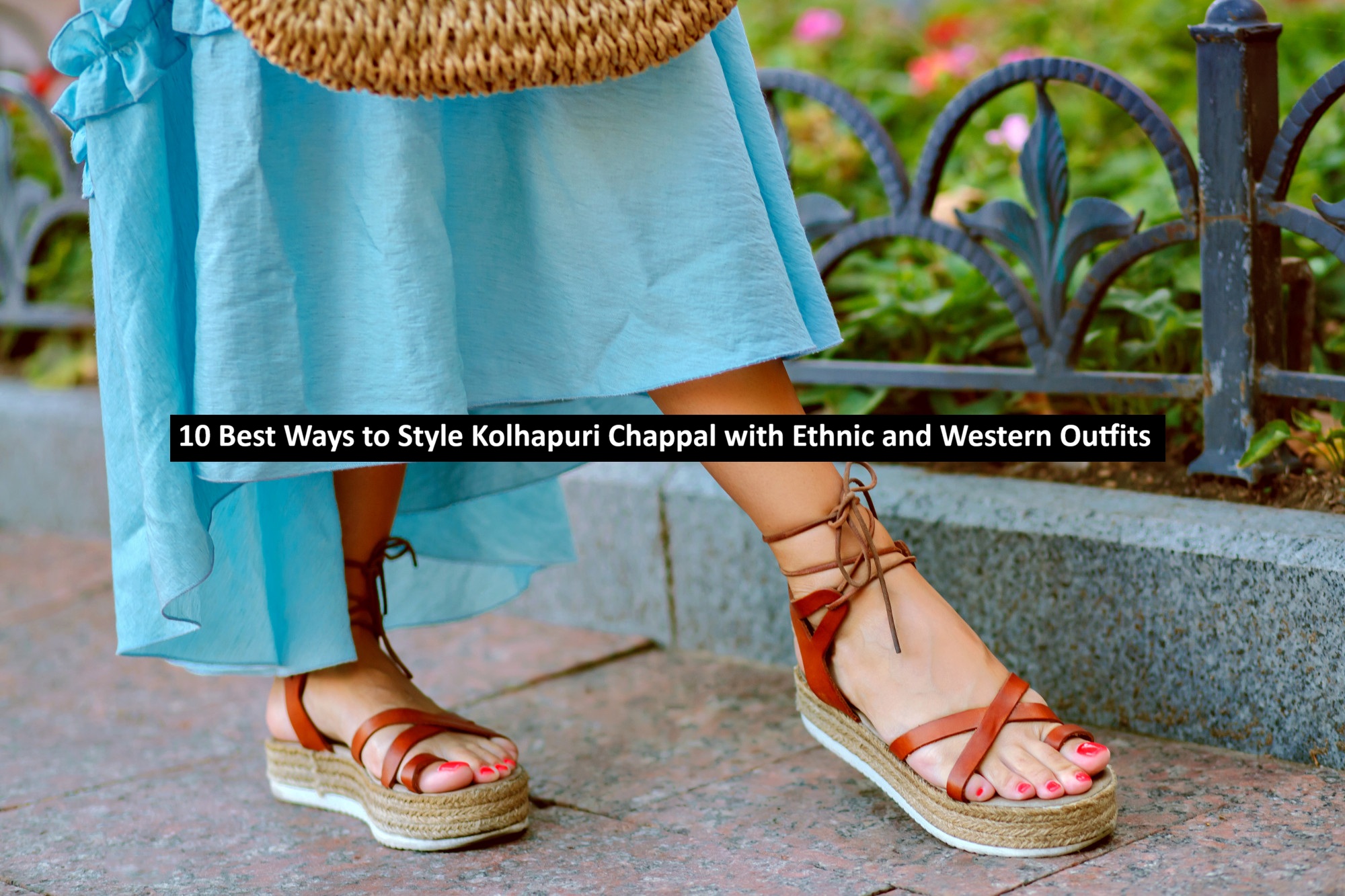
If you’ve owned a pair of Kolhapuri chappals for a while, chances are you’ve worn them with exactly one outfit and put them back on the shelf. That’s a waste of good footwear.
Kolhapuri chappals are one of those rare things in Indian fashion that actually work across multiple styles. Not because of any trend magic, but because of their simple, flat design and earthy colour palette. A pair of tan Kolhapuris can go from a cotton saree in the morning to jeans and a kurta by evening without looking out of place.
This guide covers 10 real, practical ways to style them. No vague advice, no filler.
Why Kolhapuri Chappal Works Across So Many Outfits
The Kolhapuri chappal carries a Geographical Indication (GI) tag granted by the Controller General of Patents, Designs and Trade Marks on December 11, 2018. This tag covers eight districts across Maharashtra (Kolhapur, Sangli, Solapur, Satara) and Karnataka (Belgaum, Dharwad, Bagalkot, Bijapur), protecting the craft’s authentic origin.
The flat sole, open-toe design, and braided leather straps have stayed almost unchanged for generations. This classic construction is exactly what makes them so adaptable. They don’t compete with your outfit. They just work with it.
Read: 15 Shockingly Simple Cosmetics Looks, Concurring to Best Cosmetics Specialists
10 Ways to Style Kolhapuri Chappal
1. Kolhapuri Chappal for Women with Kurti and Palazzo
Start with the most natural match. A Kolhapuri chappal for women pairs well with a straight or A-line kurti and wide-leg palazzo in cotton or linen. Tan or mid-brown is the easiest shade to start with.
The pairing works because both the kurta and the chappal lean toward earthy tones. Printed kurtis with block prints or geometric patterns are a particularly good match. If the kurta is busy with work or embroidery, pick a plain, unembellished chappal. One element should do the talking.
2. Kolhapuri Sandals with Salwar Kameez
Kolhapuri sandals and salwar kameez are a classic Indian combination that has been working for decades, and still does, without trying too hard.
For office or daily wear, cotton salwar sets in neutral shades like beige, off-white, or mustard pair well with a slightly darker chappal. If the salwar set is plain, you can go for a Kolhapuri with embossed patterns or strap detailing to add a bit of texture at the feet.
3. How to Style Kolhapuri Chappal with Saree
Sarees and Kolhapuris share deep roots in Maharashtra and Karnataka. Cotton sarees, handloom weaves like Khadi, and lighter fabrics like Chanderi all look good with flat Kolhapuri footwear for daytime wear.
For a casual drape, a simple tan or dark brown chappal works well. If you want some detail at the feet, look for chappals with mirror work or subtle embossed patterns. Avoid heavily embellished Kolhapuris under a saree with heavy zari or threadwork – it creates too much going on below the waist.
4. Kolhapuri Chappal with Lehenga: Daytime Functions Done Right
You can absolutely wear Kolhapuri chappals with lehenga – but context matters. For Mehendi, Haldi, or casual festive gatherings, a flat Kolhapuri under a flared lehenga looks clean and relaxed.
Deep-toned chappals in burgundy, navy, or forest green complement a colourful lehenga well. Avoid pairing flat sandals with heavy bridal lehengas for formal evening events – the proportions get awkward, and the footwear ends up looking like an afterthought.
5. Kolhapuri Chappals with Jeans and Kurta
This is arguably the most-worn Indo-Western combination in Indian casual dressing, and Kolhapuri chappals fit right into it. A short kurta – knee length or above – with slim jeans and a pair of Kolhapuris is a complete outfit for a day out.
If the kurta has embroidery or heavy surface work, use a plain chappal. If the kurta is minimal, you have room to pick a Kolhapuri with some design in the straps. Either way, make sure the chappal is visible below the hemline.
6. Kolhapuri Chappal with Jeans and Top: The Western Casual Combo
This one surprises people who assume Kolhapuris only belong with ethnic wear.
Straight-leg or slightly cropped jeans with a block-print cotton top or a solid-colour shirt, paired with Kolhapuri chappal, works well for a relaxed day. Tuck the top in for a cleaner look. A tan chappal with white jeans and a printed top is a good warm-weather outfit – simple to put together and looks thought-through.
7. Kolhapuri Sandals for Women with Maxi Dresses
Ethnic-print maxi dresses – ajrakh, kalamkari, ikat – pair naturally with Kolhapuri sandals for women. The flat footwear keeps the look relaxed without looking underdressed.
For a Western-style maxi dress, stick to a simpler chappal in tan or camel. A heavily embossed Kolhapuri under a Western dress can feel slightly off. When in doubt on the embellishment front, go plain.
8. Kolhapuri Footwear with Indo-Western Co-ord Sets
Co-ord sets have become a staple in Indian fashion – crop top with sharara pants, short shirt sets with palazzos, matching kurta-pant combos. Kolhapuri footwear fits naturally with all of these.
The handcrafted leather brings an earthy texture that contrasts well with the clean lines of a co-ord set. This combination works especially well when the set uses natural fabrics like cotton or handloom khadi.
9. Kolhapuri Slippers with Casual Western Outfits
Denim shorts or linen shorts with a tucked-in cotton top and Kolhapuri slippers can look intentional rather than confused – if you do it right. The overall look reads as boho-casual.
The chappal should be in good condition for this to work. Worn-out Kolhapuris with western casuals look rough rather than effortless. If you’re looking for Kolhapuri chappal designs that handle both Indian and Western outfit pairings, a brand like Around Always offers footwear built around this exact use case.
10. Kolhapuri Chappal with Anarkali Suits
Long Anarkali kurtas with flared silhouettes look good with flat Kolhapuris. The length creates a natural visual flow that works well with open-toe sandals.
If the Anarkali has heavy embroidery or surface work, pick a plain, solid-coloured chappal. If the suit is simple, you can wear a Kolhapuri with embossed strap detailing or mirror work. Let the embroidery and the footwear take turns.
Practical Styling Tips for Kolhapuri Chappal
A few things that actually change how good the pairing looks:
Match the occasion. Kolhapuri chappals work well for casual to semi-formal settings. They’re not the right call for formal evening events or weddings where heels are expected.
Break them in. Genuine leather Kolhapuris can feel stiff for the first few wears. Wear them for shorter durations initially. Traditional vegetable-tanned leather moulds to your feet over time and becomes noticeably more comfortable with regular use.
Check sizing. Kolhapuris can run slightly large compared to standard footwear sizing. If you’re buying online, go through the size chart carefully. Some people find going half a size down works better.
Take care of the leather. Condition occasionally. Keep them away from prolonged water exposure. Let them air dry naturally if they get wet.
Buy authentic. The GI tag means genuine Kolhapuri chappals come from artisan clusters in the eight designated districts of Maharashtra and Karnataka. Always check the source when buying.
Frequently Asked Questions
Can Kolhapuri chappal be worn with western outfits?
Yes. Kolhapuri chappals pair well with jeans, maxi dresses, co-ord sets, and shorts. The flat sole and earthy tones make them adaptable across outfit types.
Which colour of Kolhapuri chappal is most versatile?
Tan or camel brown is the most versatile shade. It pairs with most ethnic and western outfit colours without clashing or looking out of place.
Are Kolhapuri chappals comfortable for long wear?
They can be stiff initially. Traditional Kolhapuris made from vegetable-tanned leather mould to the foot over time. Most people find them quite comfortable after the first few wears.
Do Kolhapuri chappals have a GI tag?
Yes. The Controller General of Patents, Designs and Trade Marks granted the Geographical Indication (GI) tag to Kolhapuri chappals on December 11, 2018. The tag covers eight districts across Maharashtra and Karnataka.
What is the difference between Kolhapuri chappal and regular ethnic sandals?
Kolhapuri chappals follow a specific construction – open toe, flat sole, braided or embossed leather straps – and are handcrafted by artisan communities in designated districts of Maharashtra and Karnataka using vegetable-tanned leather. Regular ethnic sandals may look similar but don’t share the same craft origin or GI-protected status.
Author’s Bio:
Around Always is a bridal footwear brand known for stylish and comfortable footwear made for modern Indian women. We design bridal shoes and wedding shoes that blend elegance, comfort, and everyday ease.